Serving Hesperia, CA and surrounding areas. (760) 456-4930
Hesperia Concrete is a licensed concrete contractor serving Redlands, CA with pool decks, driveways, patios, and slab foundations. We have served Inland Empire homeowners since 2024, pull all required City of Redlands permits, and reply to every inquiry within one business day.
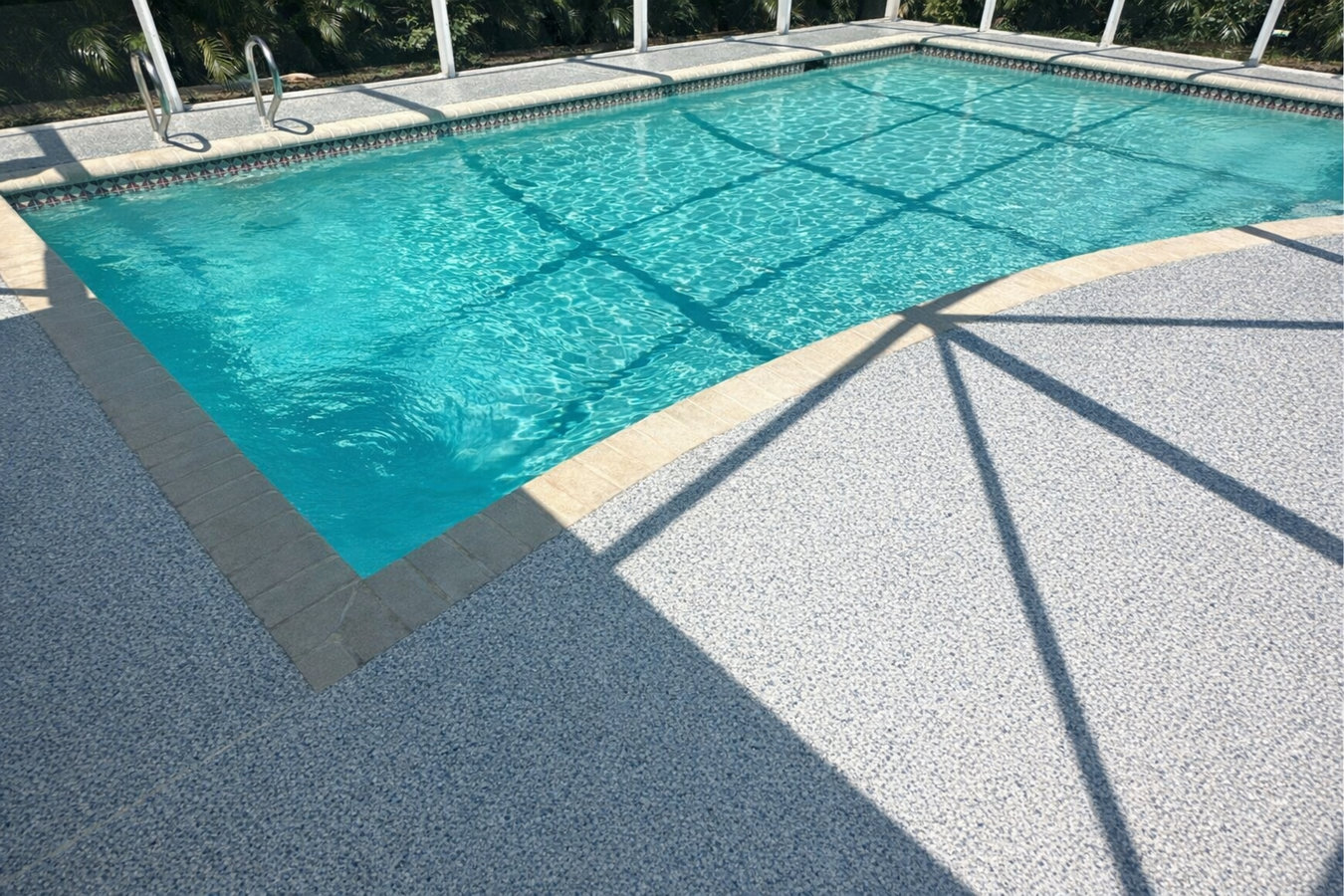
Redlands summers run hot, often topping 100 degrees Fahrenheit from June through September, and a pool deck that has cracked, faded, or lost its texture is both a safety hazard and a lost opportunity. Many Redlands pool decks were poured in the 1970s and 1980s and are now dealing with surface breakdown from decades of UV exposure and clay soil movement. Our concrete pool deck work covers new installations, full replacements, and resurfacing overlays when the existing slab is structurally sound.
Redlands has a large share of homes built before 1950, many of them near the historic downtown and the University of Redlands campus. Original driveways on those properties - often narrow, poured thin, and without modern control joints - have been lifted and cracked by decades of tree root growth and clay soil expansion. Replacement driveways on historic properties require careful planning around mature trees and landscaping that the city actively protects.
Redlands has genuine outdoor living weather from March through November, and the large lots common in older neighborhoods give homeowners real space to work with. Stamped or broom-finish concrete patios hold up to the seasonal temperature swings - hot dry summers and mild winters with occasional frost - that cause pavers to shift and heave over time. Proper drainage slope away from the house is especially important on older Redlands properties where the soil has settled over decades.
Victorian and Craftsman homes near the Kimberly Crest and downtown Redlands neighborhoods often have original front steps that are more than 100 years old. Settlement, root damage, and weathering leave them cracked, uneven, and out of compliance with current building codes. Replacing or rebuilding steps on older properties requires attention to matching the aesthetic of the original structure, not just pouring a functional replacement.
Tree-lined streets are one of Redlands' most recognized features, but mature tree roots regularly push up and crack sidewalks throughout the older neighborhoods. The City of Redlands has an active urban forestry program that manages the tree canopy - sidewalk repairs on city-adjacent walks sometimes require coordination with the city before work can begin. Homeowners are generally responsible for the sidewalk in front of their property.
Redlands has higher median home values than many nearby Inland Empire cities, and homeowners here regularly invest in outdoor upgrades that match the character of their property. Stamped concrete that mimics flagstone or brick fits the aesthetic of Victorian and Craftsman homes better than plain gray flatwork. Colored overlays and exposed aggregate finishes are also popular for pool surrounds and rear patios on the larger lots common in the older Redlands neighborhoods.
Redlands grew rapidly during the citrus boom of the 1880s through 1920s, and a large share of the housing stock from that era is still occupied today. Victorian mansions, Craftsman bungalows, and early 20th-century homes near the downtown historic district sit on lots with mature tree canopies that have had a century to grow root systems under every concrete surface on the property. Driveways, walkways, steps, and pool deck surrounds on these older properties are not just weathered - they have been actively lifted, fractured, and displaced by tree roots and the clay-heavy soils that expand and contract with each season. Fixing the surface without addressing what is underneath is a temporary repair at best.
The mid-century and newer parts of Redlands - the stucco ranch homes built through the 1960s to 1990s on the north and east sides of the city - face a different set of challenges. These properties are 30 to 60 years old, built during an era when base preparation standards were less rigorous than today. Concrete driveways and patios on those homes have been through enough seasonal moisture cycles to show the effects of the clay soil movement that runs throughout the Inland Empire. Redlands also sits at roughly 1,300 feet elevation, which means occasional overnight frost during winter - the freeze-thaw cycles that this creates accelerate cracking on surfaces that have not been properly sealed and maintained.
Our crew pulls permits regularly through the City of Redlands Building and Safety Division and is familiar with the city's requirements for exterior concrete work, including the additional review that applies to properties in or near designated historic preservation areas. On older properties near downtown, we regularly encounter original concrete work from the early to mid-1900s - narrow driveways poured without reinforcement, shallow footings, and walkways that were never designed to coexist with the mature trees that have since grown around them.
Redlands is bisected by the I-10 freeway, which gives the city easy access to the broader Inland Empire job market while keeping a small-city feel. The Orange Street and Citrus Avenue corridors connect the older residential neighborhoods near downtown to the newer subdivisions out toward the city's eastern edge. The University of Redlands campus anchors the central part of the city and is surrounded by the older neighborhood blocks where root-damaged concrete is most common.
We also serve homeowners in neighboring Yucaipa, just east of Redlands in the foothills, where the elevation is higher and the freeze-thaw stress on concrete is more pronounced. Homeowners in San Bernardino to the northwest also call us regularly for driveways and retaining walls on older valley-floor properties.
Reach out by phone or through our contact form and describe what you need - pool deck, driveway, patio, or something else. We reply within one business day and schedule a site visit at your convenience.
We visit your Redlands property, measure the area, assess soil and drainage conditions, and check for any tree root or historic preservation factors that affect the work. You receive a written itemized estimate covering materials, labor, permits, and any demolition - with no surprise add-ons after work begins.
We handle the permit application with the City of Redlands Building and Safety Division - typically a one-to-two-week process before work can begin. Once approved, we set a start date and walk you through what to clear from the work area before the crew arrives.
The crew handles demolition, base preparation, forming, and the pour - all in the sequence the permit requires. After curing, the city inspector signs off, and we walk you through the finished surface and give you care instructions before considering the job done.
We serve Redlands homeowners from the historic downtown neighborhoods to the newer subdivisions on the east side. No pressure, no surprises - just a written estimate you can count on.
(760) 456-4930Redlands is a mid-sized city of roughly 73,000 to 75,000 residents in San Bernardino County, sitting about 60 miles east of Los Angeles along the I-10 corridor. The city was founded in the 1880s as a citrus-farming community and grew quickly through the early 20th century, leaving behind one of the largest concentrations of Victorian and Craftsman-era homes in Southern California. The city of Redlands has an active historic preservation program that protects many of those older homes and the neighborhoods around them, and the Kimberly Crest neighborhood on the hillside above downtown is particularly well known for its Victorian architecture and mature landscape.
About 60 percent of Redlands housing units are owner-occupied, and single-family detached homes make up the majority of the housing stock. The University of Redlands, in operation since 1907, anchors the central city and draws faculty, staff, and long-term residents who invest in their properties. Newer subdivisions on the north and east sides of the city - stucco ranch homes and 1990s tract houses - represent a different generation of housing stock, but they share the same clay soil and seasonal temperature conditions that affect every property in the Inland Empire. The city sits adjacent to Yucaipa to the east and is linked to the broader Inland Empire by proximity to Rialto and San Bernardino to the west.
Durable concrete driveways designed and poured to handle California heat and heavy vehicle traffic.
Learn moreCustom concrete patios built to expand your outdoor living space with lasting style.
Learn moreDecorative stamped concrete that replicates stone, brick, and tile at a fraction of the cost.
Learn moreSafe, ADA-compliant concrete sidewalks for residential and commercial properties.
Learn moreStrong, finished garage floors that resist stains, cracks, and daily wear.
Learn moreArtistic concrete surfaces combining beauty and durability for interior and exterior applications.
Learn moreEngineered retaining walls that control erosion and add usable space to sloped properties.
Learn moreSmooth, level concrete floors for homes, warehouses, and commercial buildings.
Learn moreSlip-resistant, heat-reflective concrete pool decks built for desert-climate comfort.
Learn moreSturdy, code-compliant concrete steps and staircases for entryways and landscaping.
Learn morePrecision-formed slab foundations providing a stable base for new construction.
Learn moreFull-service foundation installation for residential and light commercial structures.
Learn moreHeavy-duty concrete parking lots designed for high-traffic commercial use.
Learn moreLoad-bearing concrete footings that meet local building codes and soil conditions.
Learn moreFoundation raising and leveling to restore settled or damaged structures.
Learn morePrecise concrete cutting for repairs, modifications, and new utility installations.
Learn moreServing these cities and communities.
Call us today or submit your project details online. We serve all of Redlands and reply within one business day.