Serving Hesperia, CA and surrounding areas. (760) 456-4930
Hesperia Concrete is a licensed concrete contractor serving San Bernardino, CA with retaining walls, concrete driveways, patio slabs, foundations, and flatwork. We have served Inland Empire homeowners since 2024, pull all required City of San Bernardino permits on every job, and respond to every inquiry within one business day.
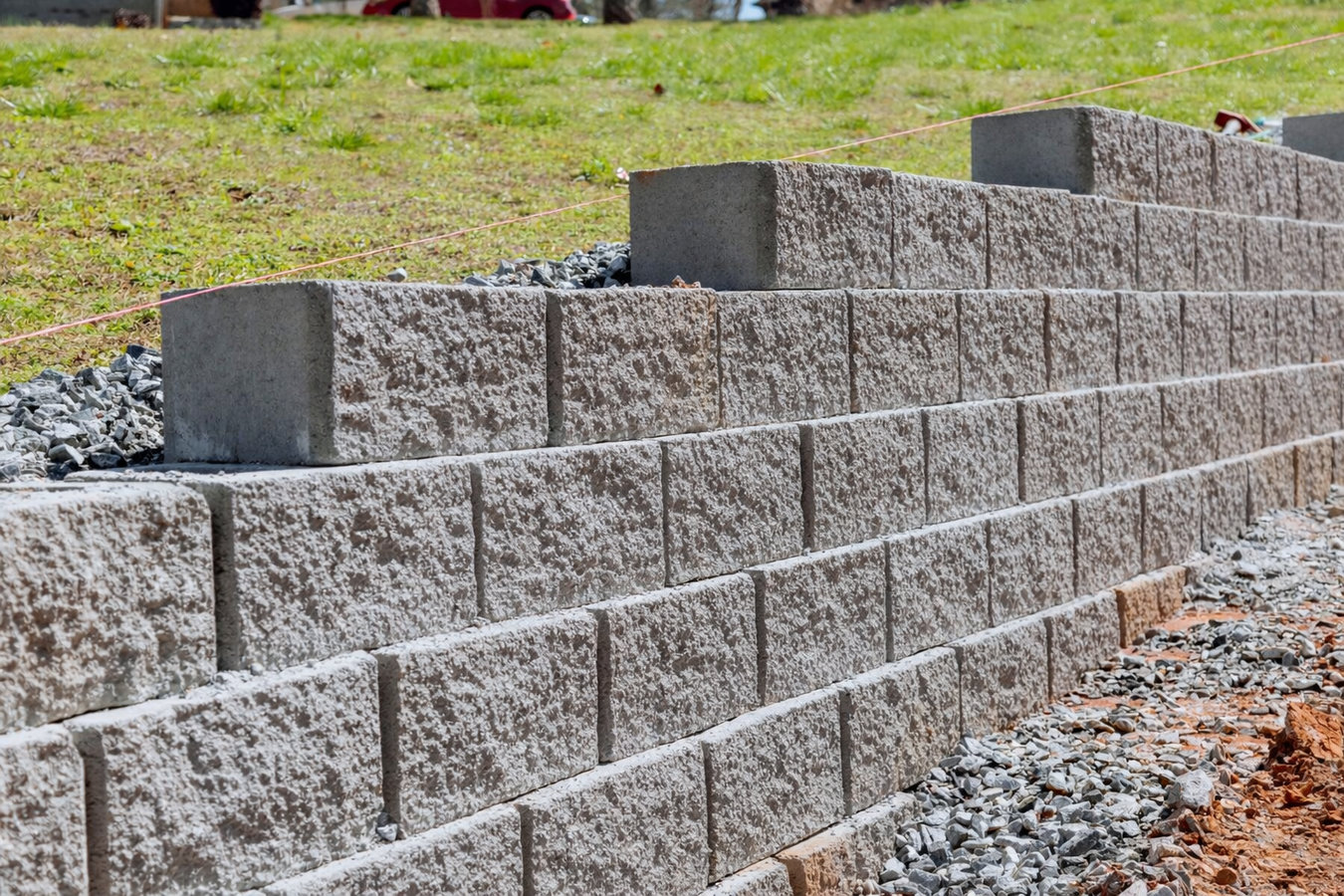
San Bernardino sits at the base of the San Bernardino Mountains, and properties in the foothills to the north often have sloped lots, cut-and-fill grading, and mature landscaping that has been putting lateral pressure on older block walls for decades. Clay soil that swells with winter rains and shrinks in summer adds to that pressure year after year. Concrete retaining walls built with proper drainage and engineered footings last 50 years and more in this environment. Full details on the process, permit requirements, and what to expect are on our concrete retaining walls page.
A large share of San Bernardino's housing stock was built in the 1940s through the 1970s, and driveways on those properties are now 50 to 80 years old. Original concrete poured during that era often lacked the base preparation, control joint spacing, and sealing that modern standards require - and the expansive clay soils in the valley floor have had decades to work on them. Replacement driveways built to current specs typically last 25 to 30 years before the next major attention is needed.
San Bernardino's outdoor season runs from spring through late fall, and the city gets warm evenings that make a rear patio genuinely usable for much of the year. Concrete patios handle the heat, occasional winter frost, and the clay soil movement that causes pavers to shift and heave. For homes near the foothills where lots tend to be larger and more irregular, stamped or broom-finish concrete adapts well to non-standard shapes.
Homeowners in San Bernardino adding ADUs, workshops, or detached structures need a properly engineered concrete slab that is designed for the local soil conditions. Clay-heavy soils expand when the ground gets wet after winter rains, which makes base preparation, reinforcement design, and drainage planning more important here than in areas with more stable ground.
Older homes near downtown San Bernardino and along the Route 66 corridor often have original concrete steps that have lifted, cracked, or settled unevenly over decades of soil movement and freeze-thaw cycles at the higher foothills elevations. Cracked or raised steps are a trip hazard and a code compliance issue during home sales - and they get worse if the underlying drainage issue is not addressed at the same time.
New construction projects in San Bernardino - whether full homes, ADUs, or large additions - require new foundation work designed for the city's mix of valley floor clay soils and foothill conditions. San Bernardino is in a seismically active region, and California building codes require specific reinforcement that affects both the rebar layout and the footing depth on every new foundation.
San Bernardino has an unusually wide range of housing ages. The older neighborhoods near downtown and along the Route 66 corridor include homes built in the 1920s through 1940s - bungalows, Spanish Colonial Revival houses, and wood-frame structures where the original concrete work, if it was ever installed at all, has long since exceeded its useful service life. One generation of homes out from downtown, the 1950s through 1970s ranch-style tract houses cover much of the city's residential middle ground. Those slabs and driveways are 50 to 70 years old, built to older standards, and have endured decades of clay soil movement without the benefit of modern control joint spacing or base preparation methods. The foothills neighborhoods on the northern edge of the city add another variable: larger, older custom homes on irregular lots with mature trees, steeper grades, and soil conditions that differ from the flat valley floor. A contractor who only knows how to work on flat suburban tracts will struggle on those foothill properties.
Climate adds a significant variable that goes beyond what most of the Inland Empire deals with. San Bernardino sits at the base of the San Bernardino Mountains, and neighborhoods in the northern part of the city experience more temperature variation than valley-floor cities like Rialto or Fontana. Summer temperatures regularly exceed 100 degrees Fahrenheit, but foothills elevations above 1,200 feet see occasional frost and cold snaps that can damage exposed concrete if the surface has any penetrating moisture. Strong Santa Ana wind events roll through every fall, and the city's proximity to major freight corridors on the I-10 and I-215 means that residential properties near those routes experience more ground vibration than typical suburban neighborhoods. All of these factors shape how concrete should be designed, poured, and maintained in San Bernardino.
We have served Inland Empire homeowners since 2024 and regularly pull permits through the City of San Bernardino Building and Safety Division for retaining walls, driveways, slab foundations, and concrete flatwork. The Building and Safety Division handles the permit applications for all structural concrete in the city, and our crews are familiar with their inspection requirements and timeline. San Bernardino is also the county seat of San Bernardino County, the largest county by area in the contiguous United States, and some projects near the city's boundaries cross into county jurisdiction - we know which permits apply to which properties.
San Bernardino's layout gives every neighborhood its own character. The neighborhoods near California State University San Bernardino on the north side sit closer to the foothills and have older, larger lots with the kind of slopes and drainage challenges that require more site assessment than typical valley-floor flatwork. The older streets near downtown and the Route 66 corridor have homes that date back nearly a century in some cases. The neighborhoods near the I-10 and I-215 interchanges are more commercially oriented, with a mix of residential and industrial properties.
We also serve the cities directly adjacent to San Bernardino. Homeowners in Redlands to the east often call us for the same retaining wall and flatwork projects we handle in San Bernardino, and Rialto homeowners to the west have similar housing stock and concrete service needs.
When you reach out, we respond within one business day and schedule a free on-site visit. We walk your property, look at the soil conditions, and assess drainage before giving you any numbers. Written, itemized estimates are provided before any commitment is made.
We handle permit applications through the City of San Bernardino Building and Safety Division. You do not need to deal with the paperwork. Once the permit is approved and on hand, we schedule the start date. No work begins before the permit is in place.
We excavate, compact the base, set forms, and place reinforcement before any concrete is poured. In summer months, pours start early in the morning to avoid peak heat. Retaining wall projects involve footing pours, wall forming, drainage installation, and backfill - all in sequence.
A city inspector verifies the completed work before backfill or heavy loading. We walk you through curing expectations - typically one week before normal use - and provide all permit documentation for your records. The paperwork stays with your property.
We serve San Bernardino homeowners with written quotes, all City of San Bernardino permits handled, and concrete built for foothills slopes, valley clay soils, and triple-digit summer heat.
(760) 456-4930San Bernardino is a city of about 222,000 people and the county seat of San Bernardino County - the largest county by area in the contiguous United States. The city sits at the base of the San Bernardino Mountains, with elevations ranging from about 1,000 to 1,500 feet across its neighborhoods. The northern part of the city borders the foothills and is home to California State University San Bernardino, a public university with approximately 20,000 students and one of the city's most recognizable institutions. The southern and central parts of San Bernardino include the downtown core, the historic Route 66 corridor, and a significant concentration of commercial and industrial land tied to the city's role as a major rail and freight hub. More on the city's history and services can be found at the San Bernardino Wikipedia article.
Residential San Bernardino spans from early-1900s bungalows near downtown to 1970s ranch tracts in the middle of the city and newer subdivisions on the edges. Roughly half of all housing units in the city are renter-occupied, which means landlord maintenance projects - deferred driveways, cracked walkways, aging patios - are a consistent part of the concrete work we see here. The San Bernardino National Forest borders the city to the north and east, and the foothills neighborhoods leading up to it have the largest lots and the most complex terrain in the city. Neighboring cities include Redlands to the east and Rialto to the west, both part of the wider Inland Empire service area we cover.
Durable concrete driveways designed and poured to handle California heat and heavy vehicle traffic.
Learn moreCustom concrete patios built to expand your outdoor living space with lasting style.
Learn moreDecorative stamped concrete that replicates stone, brick, and tile at a fraction of the cost.
Learn moreSafe, ADA-compliant concrete sidewalks for residential and commercial properties.
Learn moreStrong, finished garage floors that resist stains, cracks, and daily wear.
Learn moreArtistic concrete surfaces combining beauty and durability for interior and exterior applications.
Learn moreEngineered retaining walls that control erosion and add usable space to sloped properties.
Learn moreSmooth, level concrete floors for homes, warehouses, and commercial buildings.
Learn moreSlip-resistant, heat-reflective concrete pool decks built for desert-climate comfort.
Learn moreSturdy, code-compliant concrete steps and staircases for entryways and landscaping.
Learn morePrecision-formed slab foundations providing a stable base for new construction.
Learn moreFull-service foundation installation for residential and light commercial structures.
Learn moreHeavy-duty concrete parking lots designed for high-traffic commercial use.
Learn moreLoad-bearing concrete footings that meet local building codes and soil conditions.
Learn moreFoundation raising and leveling to restore settled or damaged structures.
Learn morePrecise concrete cutting for repairs, modifications, and new utility installations.
Learn moreServing these cities and communities.
Call us today or fill out our online form, and we will respond within one business day with a written, itemized estimate. No obligation, no surprises.